


Our roller hearth intermediate annealing furnace is a continuous automatic heat treatment equipment designed for intermediate annealing of metal pipes, bars and profiles. It is widely used after cold drawing and cold rolling to eliminate work hardening, release internal stress and restore metal plasticity for further processing.


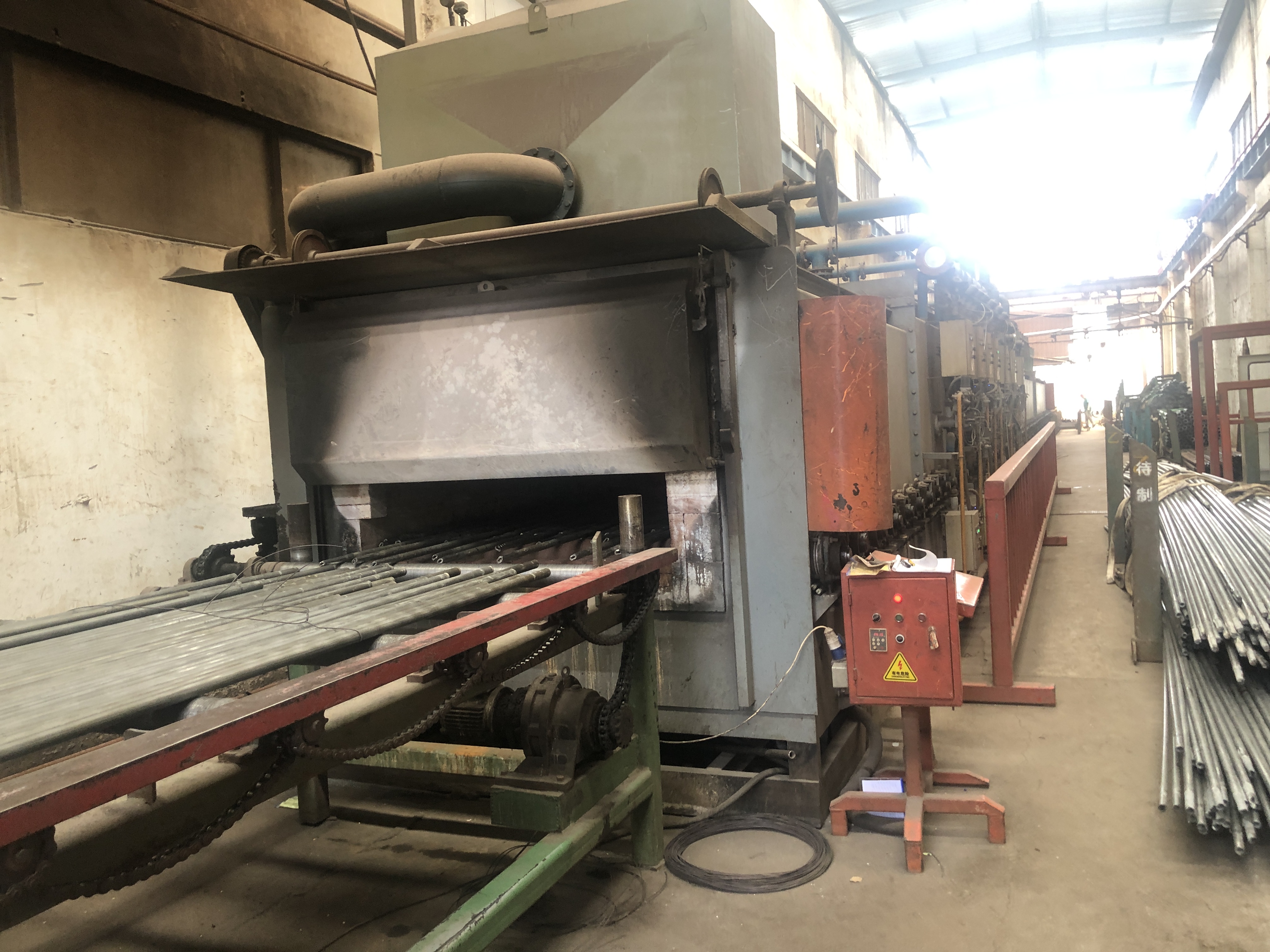
This is a continuous tube annealing furnace built around a driven roller hearth. Tubes, bars and profiles travel across the rollers through heating, holding and slow cooling in a single pass, and come off the discharge table with the work hardening from cold drawing or cold rolling taken out, internal stress released and plasticity restored for the next forming step.
It is a line furnace rather than a stand-alone oven. Material comes off the draw bench or the cold pilger mill, runs through the furnace at line speed and goes on to the next reduction or to finishing, which is why the charging and discharging ends are laid out around the equipment either side of it rather than around an overhead crane.
Because the load is carried on driven rollers instead of being dragged over a belt, long lengths, thick walls and large diameters keep their straightness and their surface through the hot zone. Roller hearth, mesh-belt and powder metallurgy sintering furnace lines are all built in our workshops in Changxing, Zhejiang, and the conveying and insulation practice behind this unit comes out of that shared range.
Every furnace is made to order. Length, temperature range, running speed and structure are fixed from the material you run and the output you need, so one design serves a precision tube mill drawing small-diameter stainless and another serves a pipe mill running heavy-wall carbon steel. Working temperature, capacity and delivery are confirmed in the written proposal against your own size list.
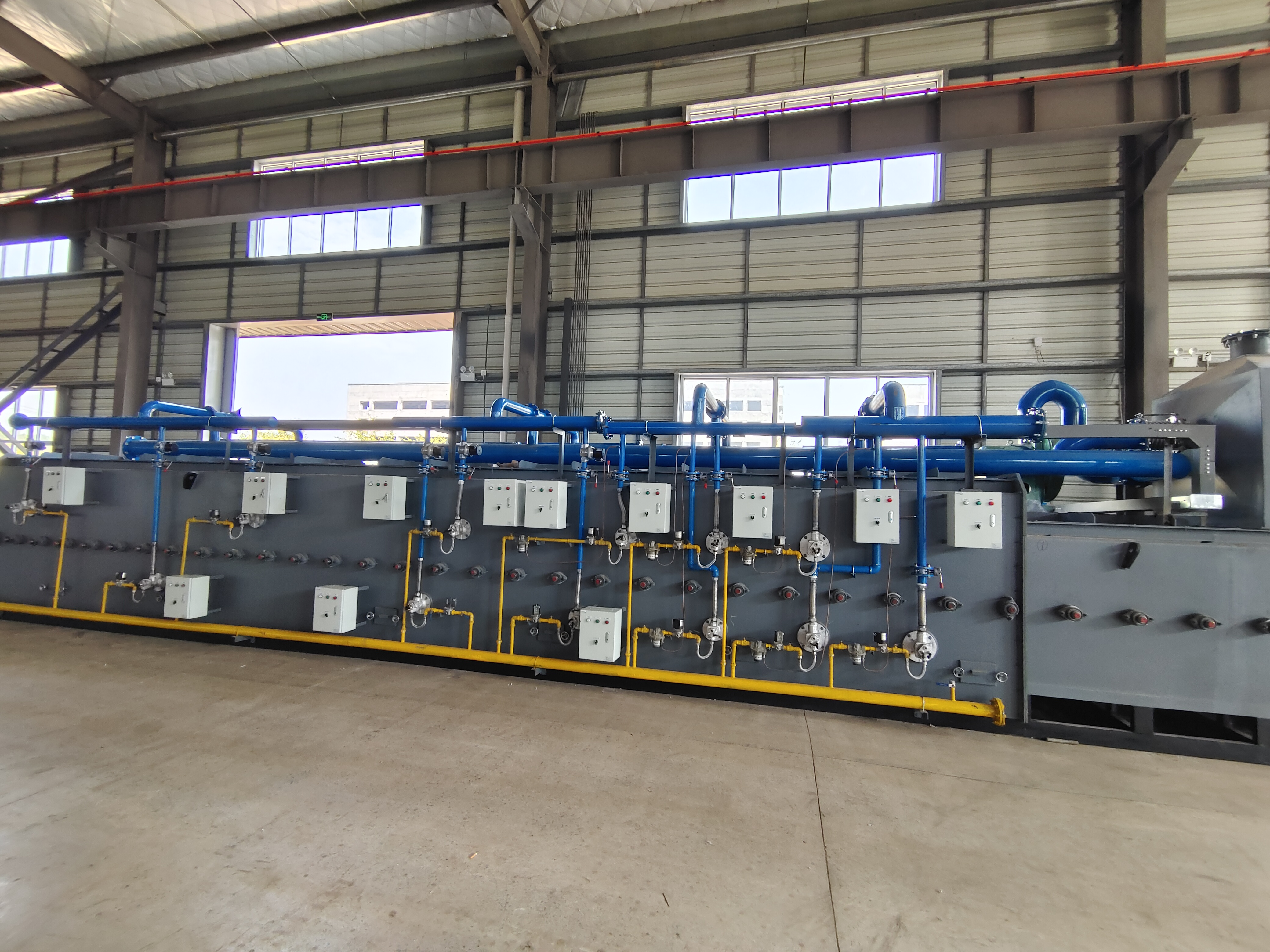
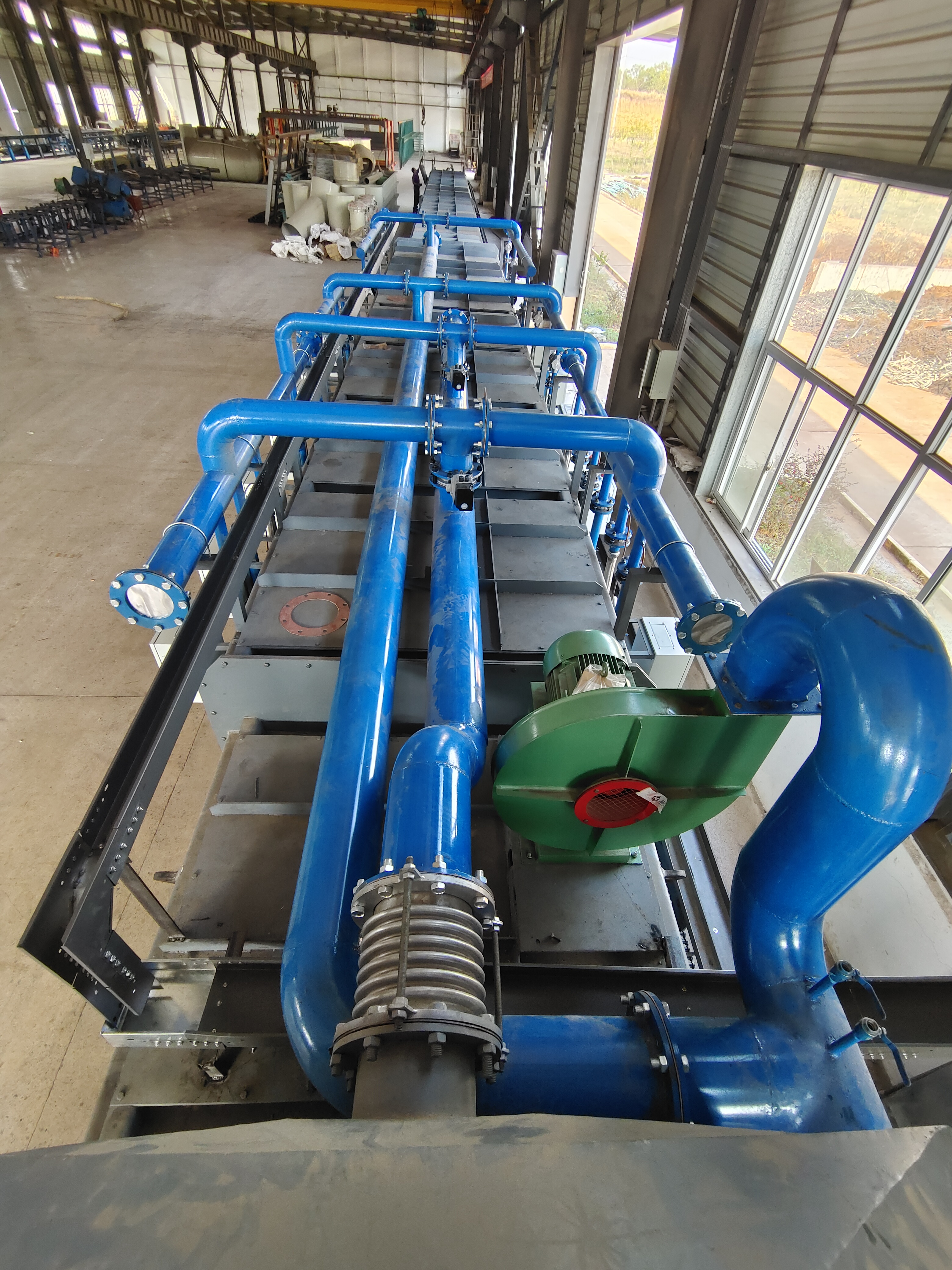
Independent zones
The furnace is split into separately controlled heating zones, each with its own thermocouple and controller. A cold tube draws heat heavily as it enters, so the first zone works harder than the soak zones behind it; splitting the furnace lets each section hold its setpoint instead of letting a cold front pull the whole chamber down. A longer furnace run at higher line speed is divided into more zones for the same reason.
The annealing window
Intermediate annealing works inside a narrow band. Too little heat and the work hardening from the previous pass stays in the wall, so the next reduction cracks the tube or overloads the mill. Too much and the grain coarsens, the surface roughens and the finished tube loses the strength it was drawn for. Carbon steel, alloy steel, stainless, aluminium and copper each sit in a different place in that band, and the profile is set for the grades on your list.
Slow cooling after the soak
The cooling section brings the tube down at a controlled rate instead of letting it cool in still air at the discharge end. That keeps thermal stress and straightness under control and stops the surface hardening again on the way out. Cooling length is matched to line speed, so the tube reaches the take-off table at a temperature your operators can handle.
Modular heating hardware
Heating elements and insulation are arranged in sections, so one zone can be isolated and worked on without dismantling the furnace — the same modular approach used across our mesh-belt furnaces and our controlled atmosphere sintering furnace builds.
A record behind every run
Temperature is traced through the pass rather than read once at the end, so each coil or bundle has a record behind it when a customer asks how the tube was annealed.
It comes from the annealing cycle your tube needs at the line speed you run: a slow cycle or a fast line means a longer heated section, and the building has to have room for it. Where floor space is tight, running speed and zone layout are looked at together before the length is settled. Temperature range The range follows the grades on your list, not just today's job. A furnace bought for carbon steel and later asked to anneal stainless needs headroom it did not have at the start, so tell us the grades you expect over the next few years and not only the one you are running now. Running speed Speed is set against the output per shift you need and the equipment either side of the furnace. The furnace cannot run faster than the mill feeds it, and running well below design speed costs temperature uniformity, so the drive is specified as a working range rather than a single figure. Structure and layout A straight-through arrangement is the simplest to install and usually the kindest to the building. Where the line or the building does not allow a straight run, the furnace can be arranged to turn, but that has to be settled at engineering stage because it changes the layout drawings, the conveying drives and the foundation. Protective atmosphere Atmosphere is available where the process needs a cleaner surface than air annealing gives. The gas train and its safety arrangement follow the same layout we build on a controlled atmosphere sintering furnace, so flow control and purge sequencing are not new ground for us. Charging and discharging The entry and exit sections are built around what already sits at each end of your line — a roller table, a transfer car, a walking beam or a manual load. Tell us what is there and how much room it needs, and the sections are made to suit rather than adapted on site.
Layout and parameter sheet
Once the design is frozen you receive a general arrangement drawing together with a parameter sheet carrying the effective heated length, roller diameter and pitch, effective width, charge height, zone count, working temperature range, cooling section length and, where supplied, the atmosphere configuration. These are the dimensions and settings the furnace is built to, so they can be checked against the building and the line before anything is dispatched. Electrical and control package Schematic diagrams, terminal and I/O lists, instrument data sheets, the control philosophy behind the zone controllers and the alarm and interlock schedule are issued with the furnace, so your own electricians can trace a fault to a terminal rather than to a rumour. Operating and maintenance manual The manual holds the annealing profiles for your size and grade list, the changeover procedure, the lubrication and inspection schedule and the recommended spare parts list, and it is written around the equipment you actually have rather than a generic template. Temperature uniformity survey The survey carried out at commissioning is recorded and issued as the reference for that furnace; repeating it at planned intervals shows whether zones are still holding their profile or whether a thermocouple or heating section is drifting. The inputs we need from you Send the tube or bar size list with wall thickness, a drawing of the floor space at both ends of the line, the utilities available and the electrical standard your plant works to. The drawings come back in a format your team can build from, and the parameter sheet matches what is installed on your floor. - Run out before you shut down. Tubes are carried to the discharge table with the rollers still turning, so no charge stands in the hot zone, and the stop is logged together with the zone temperatures at the time. - Roller check between runs. With the drive isolated, each roller is jogged or turned by hand and checked for binding, flat spots, scale build-up and a scored surface. - Guides re-set with every size change. Side guides are checked against the hearth centreline and adjusted to the new tube diameter; the wear face is dressed until it is used up rather than swapped at the first mark. - Drive and bearings on a fixed interval. Gearbox oil level, coupling condition and bearing temperature are watched, because a noisy bearing on one roller is the earliest warning before the roller seizes. - Thermocouples against a reference. Zone thermocouples are compared with a reference instrument at planned stops and replaced when the reading drifts past the tolerance you accept. Keep one spare per zone and the matching compensating cable. - Seals and insulation while the furnace is cool. Entry and exit end seals, roller end packings and the insulation of the charging sections are inspected during a shutdown, not while the line is running. - What to hold in stores. Rollers (at least one of every type fitted), thermocouples, guide inserts, end seals, drive coupling elements, and fuses and contactors for the control panel. The final recommended list is issued with the machine. - Budgeting the stop. A worn roller comes out from the side of the hearth without stripping the hearth, which keeps a weekend stop short; thermocouple replacement and insulation patching are the items that need a longer window, so they are planned rather than left to fail.
We build industrial heat treatment furnaces to order, so selection starts with your workpiece, material and output target rather than a catalogue number. Send us your drawings, process aim and site conditions; our engineers will compare the furnace types that fit, set the temperature zoning and handling arrangement around your parts, and confirm the layout with you before production begins. Custom work adjusts chamber dimensions and control configuration, while safety circuits and atmosphere safety components stay as designed. After delivery we remain reachable for start-up questions, fault finding and spare parts.
A mesh belt suits small and medium diameter tube in high-volume standard runs: the belt is light, the furnace is compact and the cost is lower. As the tube gets longer, heavier or thicker-walled, the belt has to be built heavier, the tube rests on a moving surface rather than being carried, and the risk of marking the outside wall goes up. A roller hearth supports the tube at short intervals along its length, so long and heavy sections stay straight and keep their finish. For large diameter and thick-wall tube in a pipe mill, roller hearth is the right tool.
Yes. This is a tube annealing furnace built as a line unit, so conveying height, roller speed and the charging and discharging sections are matched to the mill upstream and the take-off downstream. We need the centreline, the heights and the space at both ends to line the furnace up with equipment already on your floor. If the building cannot take a straight run, the structure can be arranged to turn, but that has to be settled at engineering stage rather than on site.
The temperature profile is changed at the control desk, so that part is quick. The mechanical side depends on how far the new size sits from the old one: side guides are re-set for the new diameter, and a jump to a much larger or smaller tube may need a different roller pitch, which is a planned change rather than a two-minute adjustment. Give us your full size list at the enquiry stage and the changeover scope is written into the layout.
Intermediate annealing is there for the metallurgy: it takes out work hardening and restores plasticity before the next reduction. The tube leaves with a normal heat-treated surface, not a bright one. If the finished product needs a fully bright, oxide-free surface, that is a bright annealing duty and a different furnace, so tell us at the enquiry stage which of the two you are actually buying, because the atmosphere and cooling sections are built differently.
The charge is not left standing in the hot zone. The usual routine is to keep the rollers turning and run the remaining tubes out to the discharge table, then deal with the stoppage, while alarms on the control system flag the condition to the operator. The exact sequence is written into your operating procedure and walked through at commissioning.
Day to day it is mostly attention to the hearth: roller rotation, the condition of the roller surfaces, side guide alignment and the drive with its bearings. Thermocouples are checked against a reference at intervals and replaced when they drift, and door seals and insulation are inspected during planned stops. Rollers come out individually when they wear, so the hearth does not have to be rebuilt in one go. The recommended spare list is handed over with the document set.


